Geometry is a fundamental branch of mathematics that deals with the study of shapes, sizes, and positions of objects. For Grade 7 students, understanding the geometry of 2D shapes is crucial as it lays the foundation for more advanced mathematical concepts. The geometry of 2D shapes involves the study of points, lines, angles, and planes, which are the building blocks of all shapes. By mastering these concepts, students can develop problem-solving skills, critical thinking, and spatial awareness.
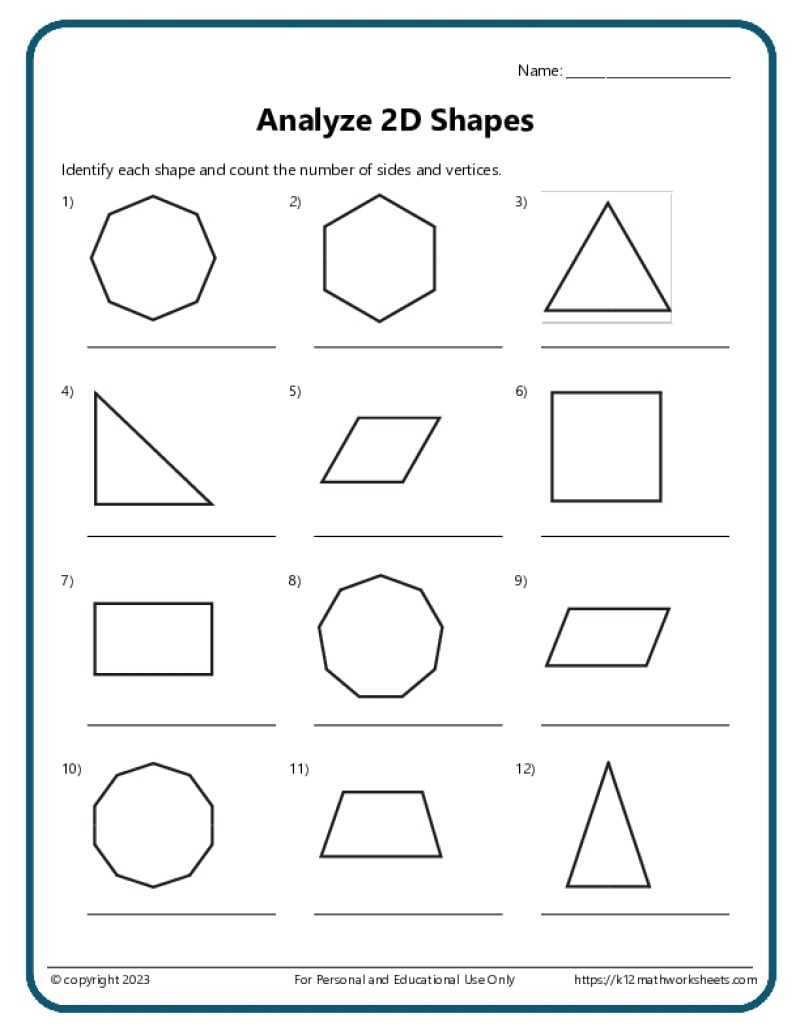
The geometry of 2D shapes is not just about memorizing formulas and theorems; it’s about understanding the relationships between different shapes and their properties. Grade 7 students need to learn how to identify, describe, and analyze various types of 2D shapes, including triangles, quadrilaterals, polygons, and circles. They should also be able to apply geometric concepts to solve real-life problems, such as calculating the area and perimeter of a room or designing a garden bed.
2D Shapes Worksheets
Understanding Points, Lines, and Angles
Points, lines, and angles are the basic elements of geometry. A point is a location in space, a line is a set of points that extend infinitely in two directions, and an angle is formed by two lines that intersect at a point. Understanding these concepts is essential for Grade 7 students as they form the basis of more complex geometric shapes. Students should learn how to identify and describe different types of angles, such as acute, obtuse, and right angles, and how to calculate their measures using various formulas and techniques.
Geometry Cheat Sheet
Exploring Properties of 2D Shapes
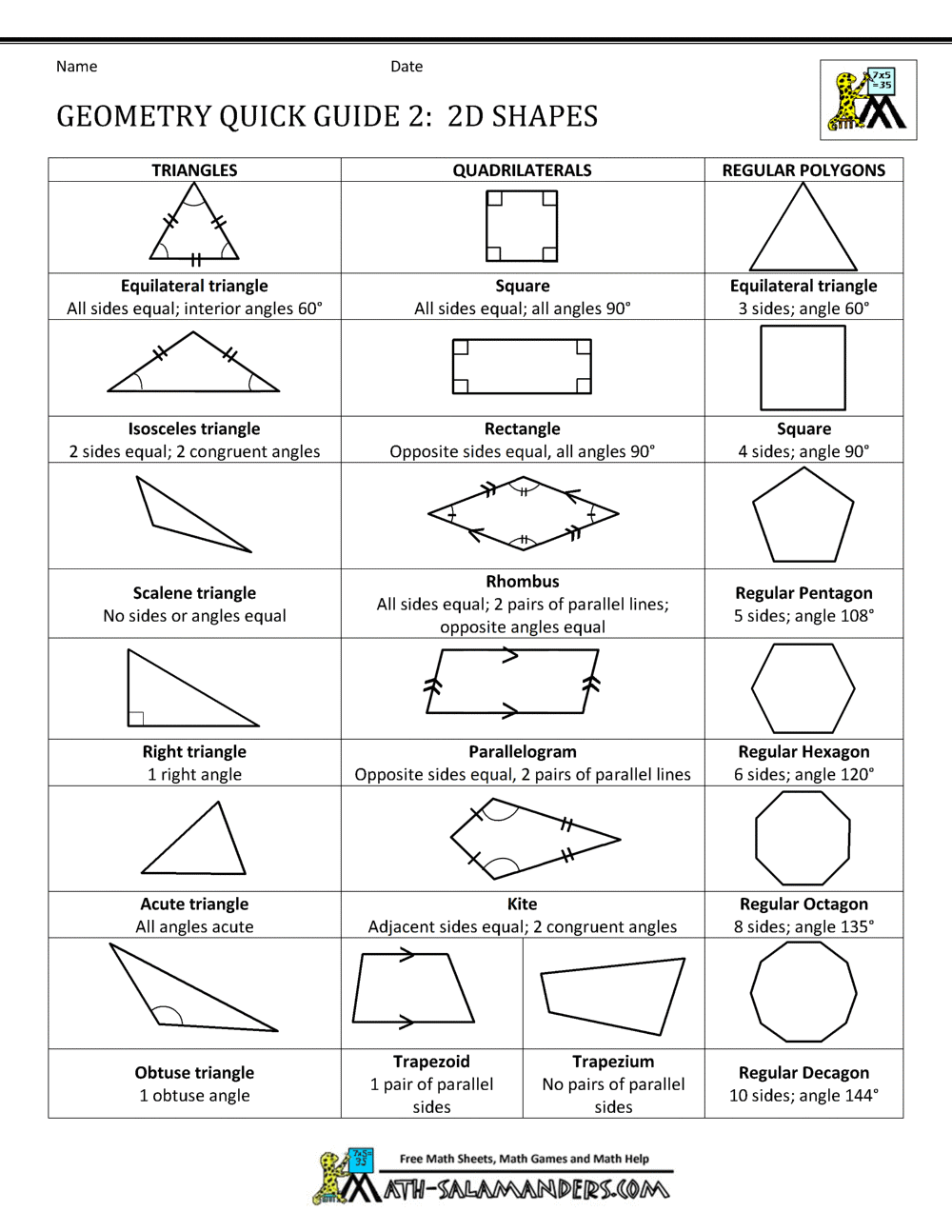
The properties of 2D shapes are what make them unique and interesting. Grade 7 students should learn about the different types of 2D shapes, including their definitions, properties, and examples. For instance, a triangle has three sides and three angles, while a quadrilateral has four sides and four angles. Students should also understand the concept of symmetry, congruence, and similarity, and how to apply these concepts to solve problems involving 2D shapes.
Applying Geometry in Real-Life Scenarios
Geometry is not just a theoretical subject; it has numerous practical applications in real-life scenarios. Grade 7 students can apply geometric concepts to design and build models, calculate distances and heights, and solve problems involving area and volume. For example, they can use geometry to design a bridge, calculate the area of a room, or determine the height of a building. By applying geometric concepts to real-life problems, students can develop a deeper understanding of the subject and appreciate its relevance and importance.
Geometry Cheat Sheet
In conclusion, the geometry of 2D shapes is a fascinating and essential topic for Grade 7 students. By mastering the concepts of points, lines, angles, and planes, and applying them to real-life scenarios, students can develop a strong foundation in mathematics and problem-solving skills. With the help of interactive resources, such as diagrams, graphs, and simulations, students can explore the world of geometry in a fun and engaging way, and discover the many wonders and applications of 2D shapes.
Geometry Cheat Sheet
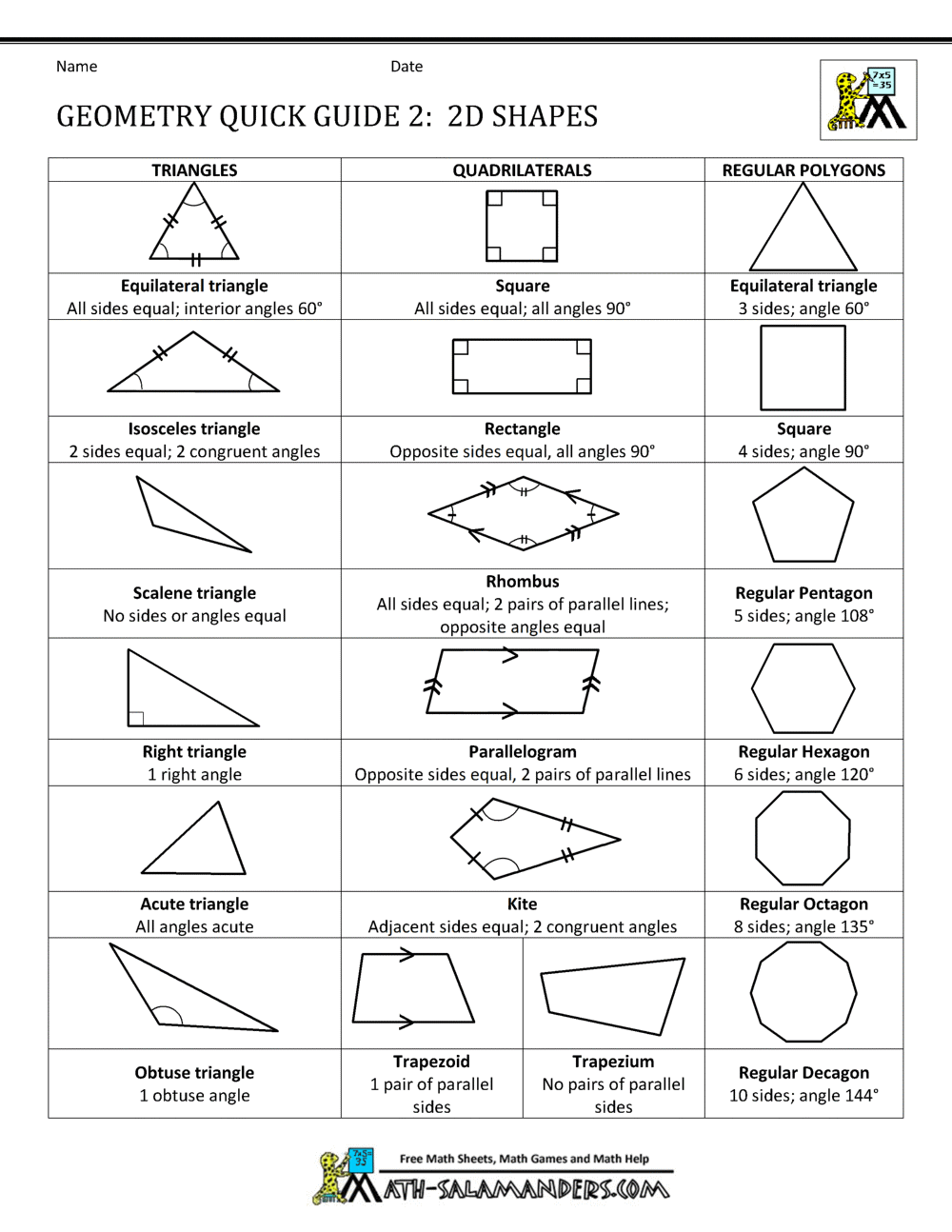
Geometry Cheat Sheet